
Running a rural hospital is one of the most demanding leadership roles in healthcare. The decisions are complex, the resources are limited, and the stakes for the community could not be higher. It’s a role that requires not only operational expertise but resilience, vision, and the confidence to navigate uncertainty. And yet, in many rural hospitals, the most significant opportunities for growth aren’t waiting outside the building. They’re already inside it.
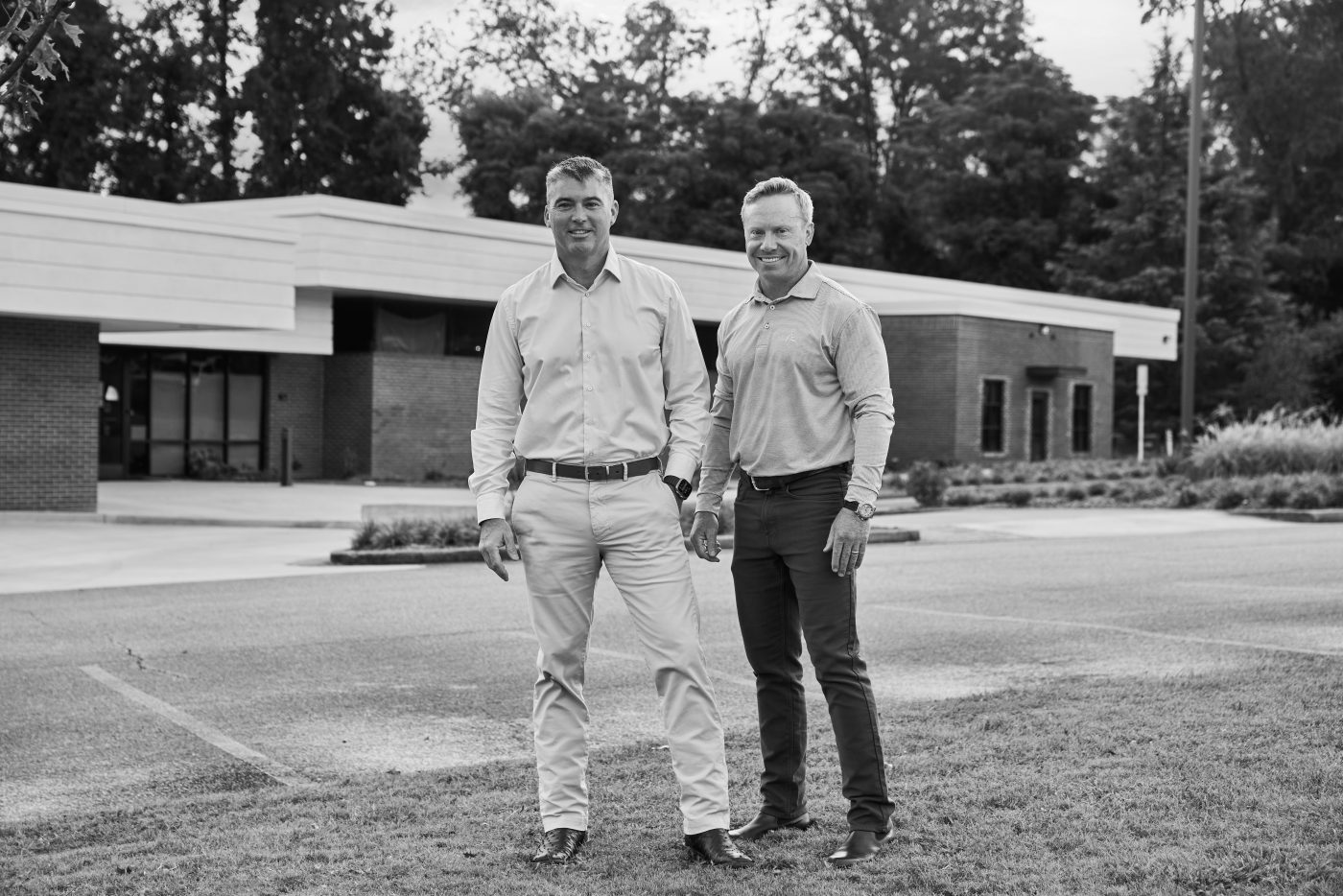
That’s a central message from Aletheia Health Partners, and it shapes everything about how the company works with the rural hospitals it serves. In a recent conversation between Michael Azzolin, CEO and Co-Founder of Aletheia Health Partners, and Kerry Trapnell, Chief Administrative Officer, the two leaders pulled back the curtain on what it really means to partner with a rural hospital, and why execution, not expansion, is where transformation begins.
Execution First. Expansion Second.
When struggling rural hospitals think about growth, the instinct is often to look outward — a new wing, a new service line, a new program. Aletheia challenges that instinct, not because growth is wrong, but because sustainable growth has to be built on a solid operational foundation.
Before a hospital considers what to add, Aletheia asks a different set of questions: Is your documentation clean? Are collections optimized? Are OR blocks fully utilized? Are swing beds being maximized? In nearly every case, the answers reveal that meaningful growth is already available, and it just hasn’t been unlocked yet.
High-performing rural hospitals don’t chase new buildings or new programs first. They maximize what they already have. The question that separates reactive hospitals from strategic ones isn’t “What should we add next?” – it’s “What are we underutilizing right now?”
“The ebb and flow of Medicaid and Medicare will always exist. But hospitals that turn their focus inward and look at operational excellence, community trust, and sustainable service delivery are the ones that thrive,’ said Kerry Trapnell, CAO, Aletheia Health Partners
This philosophy is backed by real results. At Monroe County Hospital in Forsyth, Georgia, Aletheia identified that increasing the average daily swing bed census by just a few patients would yield significant financial gains. Through targeted marketing to referring hospitals, improved intake protocols, and a culture shift toward high-touch patient care, Monroe’s average daily swing bed census climbed from 11.0 to more than 15 patients over 18 months, a 40% increase. No new building. No new program. Just better execution of what was already there.
Data Is the Map. Without It, You’re Guessing.
Knowing where the untapped opportunity lives inside a hospital requires one thing above all else: data. Not static spreadsheets or outdated reports, but real-time, interactive analytics that leadership can actually use to make decisions with confidence.
“I love data. I love letting information tell me how to make a decision, so that I’m not making an emotional one. And then we can objectively hold the people involved in that decision accountable based on that data,” said Michael Azzolin, CEO and Co-Founder of Aletheia Health Partners.
Aletheia uses cloud-based dashboards that are fully customized to each hospital’s leadership team and allow boards and administrators to explore their data in real time, drill into the numbers, and see exactly where their performance stands. The result is a leadership team that can answer the hard questions with clarity: Where are patients leaking to other facilities? Which service lines are underperforming relative to their potential? Where is growth already hiding in plain sight?
Kerry described the difference this makes at the board level: when decision-makers can actually see the data behind a difficult call — rather than relying on a feeling — they can explain those decisions confidently, whether they’re at a community meeting or running into a neighbor at the grocery store.
“Using data helps the boards in these hospitals make better decisions and feel more confident in explaining that decision when they get asked by someone they go to church with, or see in the community. Those are the decisions we want to be transparent about,” said Kerry Trapnell, CAO, Aletheia Health Partners.
Aletheia brings this same data-driven discipline to revenue cycle management, which is one of the clearest places where hospitals leave money on the table without realizing it. In just 90 days, Aletheia increased cash collections on old claims by over $600,000 at a rural Georgia hospital. At another, the team recovered enough cash from old Medicaid claims in the first two weeks to cover Aletheia’s services for more than four months. These weren’t expansion projects. They were optimization wins.
The Loneliness of Rural Hospital Leadership
Even when leaders know what needs to change, executing on it is a different challenge entirely, especially when you’re doing it alone. Kerry didn’t reach for operational language to describe the experience of running a rural hospital. He reached for something more human.
“Managing a rural hospital is one of the loneliest jobs that you can have.” You have to make a lot of decisions on your own. Working alongside someone like Aletheia, our role is to come in and help those leaders be successful whether it’s being that backstop to answer questions, bringing resources into that community, or just being that ear and that other leader that can come in with some experience to help them do the right things for their facility.”
That support isn’t generic. When a hospital partners with Aletheia, it gains access to the collective experience of every other hospital in the Aletheia network. A quality improvement process refined at one hospital can be transferred directly to another, eliminating the need to start from scratch. A project manager who helped one hospital navigate major renovations can bring that knowledge to another facility preparing for its next phase of growth.
“Yes, we’ll compete for the patient, but we’re not going to compete on ideas and resources,” said Michael. “We’re going to help one another out, so that we can elevate the capabilities of both locations and take better care of those patients.”
Culture as Competitive Advantage
Operational excellence doesn’t happen in a vacuum. It depends on the right culture, and Aletheia believes it has to be rooted in the community the hospital serves. Kerry and Michael are deliberate about this: when possible, Aletheia develops leaders from within the communities it works in, because people who grew up in a place have an investment in it that no outside hire can replicate.
The cultural framework Aletheia brings to each hospital is built around what the team calls the Three Ps: patients, people, and property. When a hospital directs its energy into those three areas — caring for patients, supporting its staff, and maintaining its facility — financial performance tends to follow. Kerry has seen it consistently: hospitals that embrace this framework see stronger patient satisfaction scores, growing census numbers, and improved financial health.
Washington County Regional Medical Center in Sandersville, Georgia, is perhaps the clearest example. Just two years ago, WCRMC was facing multi-million dollar annual losses, a damaged reputation in the ER, and ballooning contract staffing costs. Aletheia stepped in, not to take over, but to execute a locally-tailored turnaround strategy. Over 30 costly contract positions were eliminated or consolidated. Local talent was recruited and retained with meaningful pay increases. Services were realigned with genuine community need. Within 24 months, the hospital shifted from chronic losses to profitability, and the community’s renewed confidence translated into a $15.5 million bond approval for a new Emergency Department and infrastructure improvements.
None of that started with expansion. It started with execution.
A Flexible Model Built Around Where You Are
Not every hospital needs the same kind of support. Some need comprehensive management. Others have strong leadership already in place but gaps in specific areas like revenue cycle, human resources, pharmacy operations, or IT services. Aletheia is built to serve both.
For hospitals that want to start small, Aletheia offers a flexible approach by letting hospitals choose the specific areas where they need support, without committing to full management. It’s a way to build trust gradually, demonstrate value, and grow the partnership as the hospital’s confidence grows.
Kerry acknowledged that for many hospitals, the word “management” carries baggage from past experiences with large systems that arrived with their own playbook and little regard for local culture. Aletheia is deliberately different. The goal isn’t to impose a way of doing things. It’s to strengthen what’s already there.
Transparency as a Foundation of Trust
The name “Aletheia” is no accident. Derived from an ancient Greek word meaning ultimate truth, it reflects the core commitment the company makes to every hospital it serves: complete transparency. When communities don’t understand why decisions are being made at their local hospital, trust erodes. Aletheia works to reverse that by helping hospitals tell their story openly – explaining decisions, sharing data, and building the kind of community confidence that makes a hospital’s future sustainable.
That transparency is also what keeps the hospital’s identity intact. Decisions remain with the board and local leadership. Aletheia’s role is to make sure those decision-makers have the data, the context, and the support structure to choose well for their community.
“Aletheia believes this very strongly — it’s still your hospital. The hospital belongs to that community. The decisions made at that hospital are still made by the boards of that facility, the management of that facility. We’re here to help them make sure they have the data, the resources, everything they need to make the best decisions,” said Kerry.
Thrive, Not Just Survive
Rural hospitals are resilient. They are community anchors, and the people who run them are doing extraordinary work under extraordinary pressure. Too often, the headline narrative focuses on how many hospitals are at risk of closing and not nearly enough attention goes to the ones that have found a way to keep going, to adapt, and to grow.
Aletheia exists to help rural hospitals rewrite that story. Not by adding more before they’re ready, but by helping them see and act on the opportunities they already have. When execution is strong, when data drives decisions, when culture is rooted in community, and when leadership is supported rather than replaced, growth follows naturally.
The path forward for rural hospitals isn’t always paved with new programs or new buildings. Sometimes it starts with a better look at what’s already inside the walls.
Find Out How Aletheia Health Partners can help your hospital maximize what it already has. Visit aletheiahp.com.